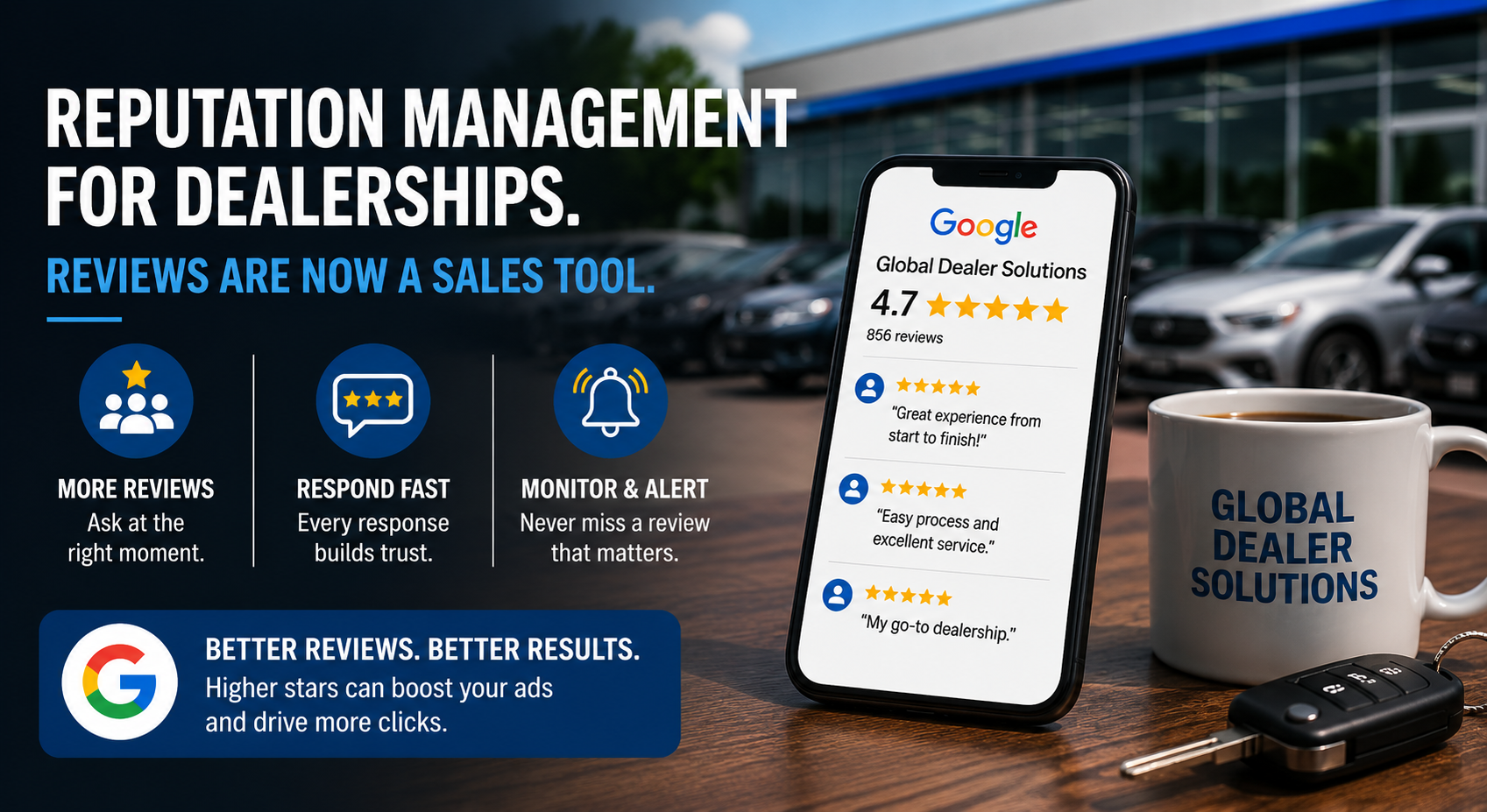
Before a buyer ever sets foot in your showroom, they've already formed an opinion about your dealership. They've read your Google reviews. They've checked your rating. They've skimmed through the one-star complaints and the five-star raves. And in most cases, they've made a preliminary decision about whether to give you a chance.
Reviews Are Now Part of the Sales Funnel
88% of buyers trust online reviews as much as personal recommendations from friends and family. Reviews aren't just a reputation factor — they're a direct part of your sales funnel. A dealership with 4.7 stars and 800 reviews starts every customer interaction from a position of established trust. A dealership with 3.8 stars and unanswered complaints starts from a deficit the sales team has to overcome on the floor.
The Three Components of a Review Strategy
Volume Generation
The most common reason dealerships have weak review profiles isn't bad performance — it's not asking. A systematic, low-friction review request process (text, email, in-person) at the right moment in the customer journey dramatically increases review volume.
Response Management
Responding to reviews — especially negative ones — is one of the highest-impact actions a dealer can take. A thoughtful, professional response to a critical review demonstrates accountability and often converts a skeptical prospect into a buyer. Silence is interpreted as confirmation.
Review Monitoring and Alerts
You need to know when reviews are posted, especially critical ones, so you can respond quickly. Real-time alerts ensure you're never caught off guard by a viral complaint.
Google Stars Affect Your Ad Performance
Your Google Business Profile star rating directly affects your Search ad performance. Google Seller Ratings can appear in your paid ads — a visible trust signal that improves click-through rates. A strong review profile pays dividends across your entire digital marketing investment.